

When a 1% Fuel Discrepancy Represents $1 Million
VERIDAPT | October 2026
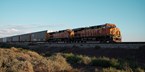
With rail freight volumes rising and mining companies under pressure to reduce diesel consumption, accurate fuel reconciliation is a financial priority.
North America's freight rail industry is moving more freight, with higher diesel prices adding to operating costs pressures. U.S. rail traffic increased 7.2% year-on-year in the week ending 10 October 2026, with intermodal volumes rising 10.4%., according to the Association of American Railroads (AAR). Shipments of metallic ores and metals jumped 19.7%, reinforcing rail's importance to industrial and mining supply chains.
At the same time, diesel dependence is drawing greater scrutiny across the mining sector. A new October 2026 analysis from the Institute for Energy Economics and Financial Analysis (IEEFA) estimates that Australian mining could reduce annual diesel consumption by 10–20%, equivalent to 1.15–2.3 billion litres, through improvements across mobile equipment, power generation and transport.
These developments point to a shared challenge for rail and mining executives: controlling fuel expenditure through more efficient equipment and operations coupled with accurate data-driven information tracking fuel procurement, storage and dispensing.
The Financial Cost of Unaccounted-For Fuel
Fuel price volatility makes inventory discrepancies more costly. The US Energy Information Administration reported an average on-highway diesel price of US$6.276 per gallon on 19 October 2026 (approximately US$1.66 per litre). While big industrial operators typically purchase fuel under different commercial arrangements, the figure serves to illustrate the broader market pressure.
For a company handling 100 million litres annually, a 1% discrepancy represents one million litres of fuel requiring reconciliation. The financial exposure can vary considerably depending on the actual delivered cost.
|
Delivered diesel cost |
Value of 1% discrepancy |
|---|---|
|
US$1.00/L |
US$1 million |
|
US$1.25/L |
US$1.25 million |
|
US$1.50/L |
US$1.5 million |
|
US$1.66/L |
US$1.66 million |
These figures underscore the value of unaccounted-for fuel, not confirmed losses or guaranteed savings. Discrepancies may also result from measurement inaccuracies, delayed transactions, recording errors, unrecorded transfers or actual physical losses. Identifying the cause is essential before determining the financial impact.
For CFOs and operations executives, this distinction matters. An unexplained variance affects confidence in inventory records and cost reporting, even when no physical fuel has been lost.
Why Rail and Mining Face the Same Challenge
Rail operators manage diesel across locomotive servicing centres, bulk storage tanks, fuel deliveries and dispensing points. Mining companies face comparable challenges across remote fuel farms, mobile refuelling equipment, contractors and heavy machinery. In both environments, disconnected systems and manual reporting can make it difficult to reconcile physical inventory against recorded transactions.
The challenge becomes more significant as operations expand. A discrepancy at one facility may be relatively small, but inconsistent measurement and reporting across multiple locations can make it difficult to identify recurring problems or compare performance.
IEEFA's October analysis adds another dimension to the issue. Its estimate of 10–20% potential diesel savings across Australian mining reflects a broad range of operational improvements, including mine planning, transport integration and generator efficiency. Achieving those reductions requires more than accurate fuel records alone, but reliable consumption data is essential for establishing baselines and measuring progress.
How VERIDAPT Helps Close the Visibility Gap
VERIDAPT addresses fuel accountability by connecting measurement and transaction data across industrial fuel infrastructure.
Its AdaptNX controllers and connected instrumentation can capture information from fuel storage and dispensing systems, while the AdaptIQ platform brings that information together for monitoring, analysis and reconciliation.
For example, a locomotive provisioning centre may receive a bulk diesel delivery, store the fuel in tanks and dispense it across multiple locomotive servicing points. By comparing recorded deliveries, tank inventory changes and dispensing transactions, operators can investigate differences between expected and recorded fuel movements.
The same approach applies to mining fuel infrastructure, where deliveries, storage and equipment refuelling must be reconciled across geographically dispersed locations.
Rather than relying solely on periodic manual checks, connected monitoring can help operators identify unusual patterns earlier, improve the reliability of inventory records and reduce the time spent investigating discrepancies.
Better Fuel Decisions Start at the Point of Measurement
Wayne Arthur, VP Mining, VERIDAPT
"One of the biggest challenges in large industrial operations is that fuel information often comes from different systems, locations and teams. A delivery may be recorded in one system, tank levels measured elsewhere and dispensing transactions managed separately. When those records don't align, understanding the cause can take considerable time.
"What operators need is a reliable view of fuel movements from the moment it arrives on site to the point it is dispensed. That gives operational teams the information to investigate discrepancies and gives management greater confidence in the figures used to make the right financial decisions."
A Practical Priority for 2027
As rail operators respond to growing freight demand and mining companies pursue diesel efficiency improvements, accurate fuel measurement deserves greater attention in operational planning. Investments in locomotive technology, equipment productivity and energy efficiency remain important, but their financial benefits are easier to evaluate when fuel consumption and inventory data can be trusted.
For organisations managing millions of litres across multiple locations, better reconciliation can strengthen financial reporting, expose avoidable losses and provide a clearer basis for measuring efficiency initiatives.
VERIDAPT's fuel and inventory intelligence solutions support that process by connecting field measurements with operational reporting, helping rail and mining companies establish greater control over fuel movements and costs.
Before organisations can determine how much diesel they could save, they need to know how much they can accurately account for.
About VERIDAPT
VERIDAPT provides digital fuel and inventory intelligence solutions for mining, rail and industrial operations. Its AdaptIQ platform combines connected field data and analytics to improve fuel visibility, reconciliation and operational decision-making.
Wayne Arthur is Vice President, Mining at VERIDAPT. A mechanical engineer with more than 25 years experience in mining, manufacturing and project delivery, he leads a global team delivering VERIDAPT's IoT solutions for fuel, emissions and energy optimization and management.

Share this article


Read next

VERIDAPT | October 2026


VERIDAPT| October 2026