

Fuel Flows
International Mining | July 2026
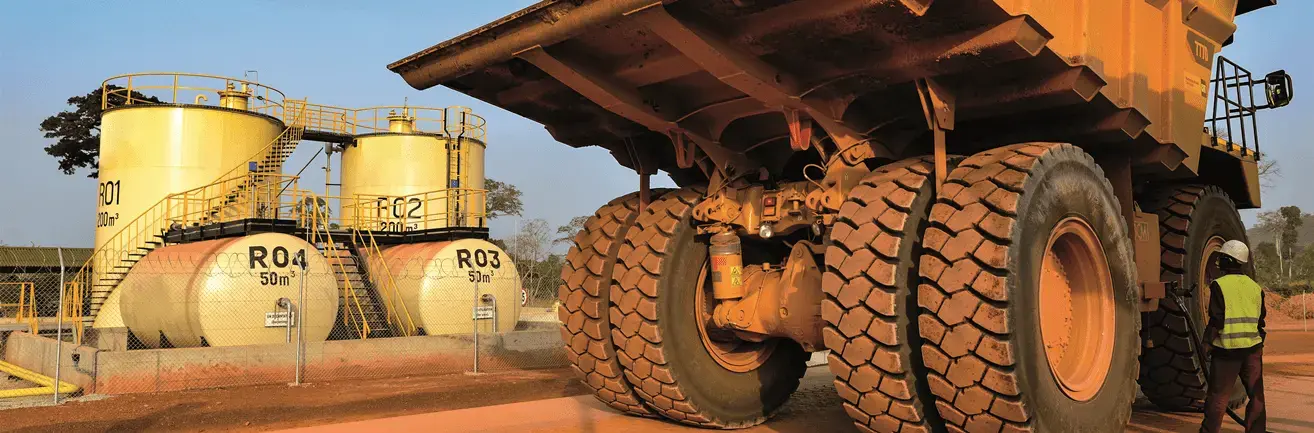
Diesel and lubricant costs are currently volatile, so the sensors, software and systems that help mines monitor and manage their consumption are ever more important, reports Paul Moore
Fuel remains one of the largest operating costs for mining companies along with power. When prices spike or supply chains become unreliable, even small inefficiencies can erode millions of dollars in operating margin. As a result, mining operators are increasingly investing in real-time fuel visibility and operational intelligence to improve efficiency, strengthen resilience, and protect profitability.
VERIDAPT’s AdaptIQ software platform, which currently monitors approximately 40 billion litres of hydrocarbons annually, it says is helping mining companies move from reactive fuel management to proactive optimisation. AdaptIQ software records, reports and analyses the monitoring, ordering, delivery, transfer and dispensing of fuel and lubricants in real-time. It records data, such as live, real-time stock in storage tanks, silos and stockpiles or other storage facilities and live movement of fuel and lubes to and from the storage facility, or an asset that will use the resource, such as a vehicle being refuelled.
Variances are identified in real time, providing operators with immediate visibility and enabling proactive intervention where losses or irregularities occur.
Underpinning the platform is VERIDAPT’s proprietary fuel management hardware, engineered and manufactured in-house for extreme industrial environments. Devices are laboratory and field tested well beyond normal operating condition, including exposure to heat, cold, vibration and physical impact, ensuring reliable performance in remote and high-demand operations. Hardware integrates directly with tanks, pumps and dispensing infrastructure, capturing accurate data at source.
Data is securely transmitted via encrypted private cellular networks or customer networks to the SOC 2 certified AdaptIQ cloud platform, a secure enterprise-grade web application designed to track and reconcile hydrocarbons and energy supply chains with precision while facilitating real-time emissions reporting.
The company states: “Fuel theft, misallocation, and inaccurate reconciliation remain major challenges across many mining operations, particularly at remote sites where visibility is limited. Modern fuel management software helps operators gain tighter control over inventory through automated tracking, connected monitoring, and real-time reconciliation.”
VERIDAPT’s AdaptIQ platform it says can reconcile fuel inflows and outflows with up to 99% accuracy, enabling operators to track every litre from delivery through to dispensing. “This becomes increasingly important during periods of elevated diesel prices because fuel losses become significantly more expensive; inventory discrepancies can trigger emergency fuel purchases; and hidden theft can distort supply planning and reporting.”
By digitising fuel accountability, mining companies can reduce shrinkage, improve transparency, and strengthen operational control across the fuel supply chain. VERIDAPT: “Connected fuel operations platforms provide real-time insights into fuel consumption, burn rates, pit stop time, and refuelling performance. This enables operators to quickly identify excessive fuel consumption, abnormal fuel burn, inefficient refuelling, and underperforming equipment.”

VERIDAPT’s AdaptIQ software platform currently monitors approximately 40 billion litres of hydrocarbons annually, and it says is helping mining companies move from reactive fuel management to proactive optimisation
VERIDAPT says the AdaptIQ platform helps mining operators improve burn-rate performance; refuelling efficiency; service truck productivity; and fleet utilisation. In large-scale mining operations, even a 3-5% improvement in fuel efficiency can deliver substantial cost savings across fleets operating continuously.
It argues that remote mining operations are especially vulnerable to diesel supply disruptions due to their dependence on long-haul deliveries and imported fuel. Real-time monitoring systems improve resilience by providing visibility into storage levels, usage trends, and procurement requirements.
“Automated forecasting and alerts help operators avoid running critical equipment dry, over-ordering fuel inventory; costly emergency fuel shipments, and supplier performance issues during volatile market conditions. This level of operational intelligence enables mining companies to make faster procurement decisions while improving supply reliability. Fuel consumption patterns often provide early indicators of equipment performance issues before failures occur.”
Unexpected increases in fuel burn or lubricant usage may point to engine inefficiencies, fuel leaks, injector problems, or drivetrain faults. By identifying these anomalies in real time, mining operators can shift toward predictive maintenance strategies that reduce downtime and improve asset reliability. In an environment where a single haul truck can cost upwards of US$5 million, VERIDAPT argues that catching a developing fault early, rather than after a breakdown, is not just operationally smart; it is financially critical. This becomes particularly valuable during supply chain disruptions when spare equipment and replacement parts may be delayed or difficult to source.
As ESG expectations continue to rise, mining companies are under increasing pressure to improve emissions transparency and demonstrate measurable progress toward sustainability targets. Real-time fuel and emissions monitoring systems support this by automatically tracking fuel consumption by asset; carbon emissions data; renewable energy usage; and alternative fuel integration.
VERIDAPT currently monitors tens of millions of tonnes of CO₂ emissions annually, helping mining companies strengthen ESG reporting, regulatory compliance, and investor transparency. It says this data is becoming increasingly important as the mining industry transitions toward hybrid fleets, renewable diesel, battery-electric equipment, and mixed-energy operations.
One of the most significant advantages of connected fuel management is operational visibility. “In volatile energy markets, mining executives need immediate access to critical operational intelligence, including fuel availability, consumption trends, high-usage assets, and emerging inefficiencies. Centralised operational reports enable faster and more informed decision-making around fleet deployment; production planning; fuel procurement; inventory prioritisation; and cost control.”
The company concludes: “As diesel markets remain unpredictable, mining companies are recognising that traditional fuel management approaches are no longer sufficient. In today’s mining environment, fuel visibility and operational intelligence are becoming critical for competitive advantages, not optional efficiencies.”
Read the full International Mining issue here

Share this article


Read next

VERIDAPT | June 2026


VERIDAPT| May 2026